Air Fittings Explained: What You Actually Need
May 13, 2026
The right air fitting depends on your system, your tools, and how you use them day to day.
Choosing the wrong size, type, or material can lead to leaks, pressure loss, and unnecessary wear on your equipment.
If you want reliable performance, it starts with understanding what you actually need and where mistakes most often occur.
Why Air Fittings Matter More Than You Think
Air fittings may seem like small components, but they play a major role in how your system performs.
When fittings are not matched correctly, you may notice:
- Reduced airflow and pressure
- Leaks at connection points
- Increased wear on hoses and tools
- More frequent maintenance and downtime
In many cases, performance issues are not caused by the compressor or tool.
They come down to the connections.
The Three Things You Need to Get Right
When choosing air fittings, focus on three factors:
- Size
- Type
- Material
Each one directly affects performance, compatibility, and durability.
Size: Getting the Right Fit For Airflow
Incorrect sizing is one of the most common causes of pressure loss.
Air fittings need to match both:
- The hose or pipe size
- The airflow requirements of your tools
What happens when size is wrong?
- Too small: restricted airflow and reduced tool performance
- Too large: poor sealing and inefficient operation
If your tools feel underpowered, the issue is often not the tool itself.
It is the restriction created by undersized fittings.
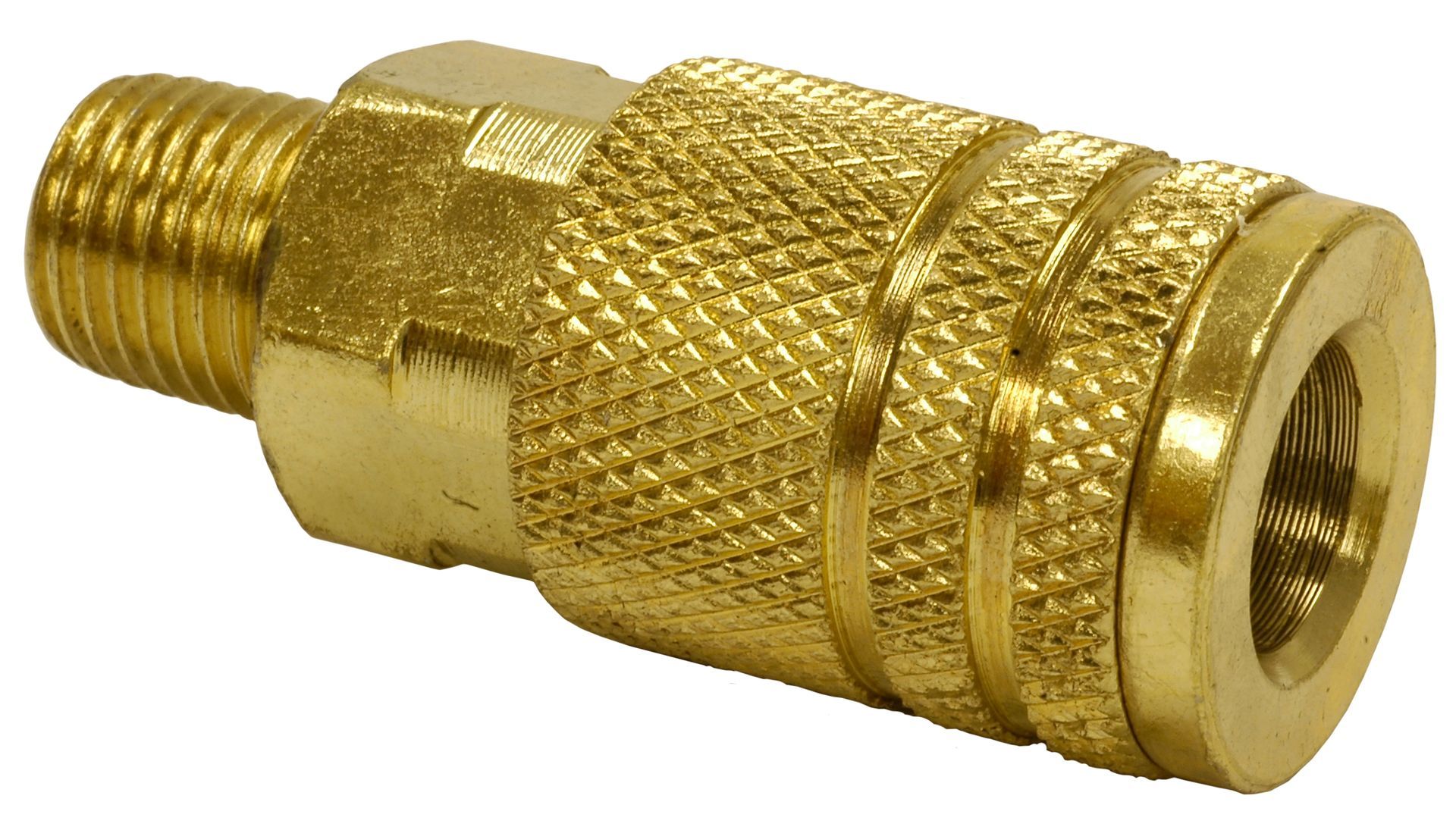
Type: Understanding Connection Styles
There are several types of air fittings, and compatibility matters.
- Common types include:
- Quick-connect couplers
- Threaded fittings
Why Type Matters
Different styles are not always interchangeable.
Mismatched fitting can lead to:
- Loose connections
- Air Leaks
- Unsafe operation under pressure
For most setups, quick-connect fittings are preferred because they:
- Allow fast tool changes
- Reduce downtime
- Maintain consistent connections
But even within quick-connect systems, not all designs are standardized.
That is where confusion often starts.
Material: Choosing for durability and the environment
The material of your air fittings affects both their lifespan and performance.
Common materials include:
- Brass
- Steel
- Composite materials
How to choose
- Brass offers corrosion resistance and reliable sealing
- Steel provides strength for heavy-duty use
- Composite options reduce weight and resist some environmental wear
If your equipment is used in demanding environments, material choice becomes even more important.
Where problems start
Many air system issues stem from small decisions that are easy to overlook.
The most common mistakes include:
- Mixing incompatible fitting types
- Using worn or damaged connectors
- Choosing fittings based on price instead of performance
- Ignoring airflow requirements
These problems often show up as:
- Leaks that keep coming back
- Tools not performing as expected
- Increased maintenance over time
In most cases, the fix is not complicated.
It starts with using the right components from the beginning.
How to choose the right air fittings for your setup
If you want a simple way to decide, focus on how your system is used.
Ask yourself:
- What tools am I connecting most often?
- How much airflow do those tools require?
- Am I using this setup in a shop, jobsite, or mobile environment?
A simple breakdown
Choose fittings that:
- Match your hose and tool size exactly
- Use consistent connection types across your system
- Are designed for the environment you work in
When everything matches, your system runs more smoothly and requires less attention over time.
What Reliable Performance Really Comes Down to
Air fittings are not the most visible part of your setup, but they are one of the most important.
When they are correctly matched:
- Tools perform better
- Leaks are minimized
- Equipment lasts longer
- Work becomes more consistent
When small issues go overlooked, they quickly escalate.
Final thought
The best air fittings are the ones you never have to think about.
- They connect securely.
- They maintain pressure.
- They hold up under real-world conditions.
When your fittings are doing their job, everything else works the way it should.

Connect with The Team at KDAR Company
Small connection points are often where bigger problems start.
If you need help selecting air fittings or accessories that fit your setup, connect with the team at KDAR Company.
We focus on helping you choose components that perform consistently in real-world conditions, so you can stay focused on the job, not on connection problems or equipment downtime.