Cable Tie Material Match: What Actually Matters
February 12, 2026
Cable ties may be one of the smallest components on a job site, but they play an important role in organization, safety, and reliability.
From securing welding leads to bundling hoses and managing cables, the right tie helps protect equipment and keep workspaces efficient.
With so many options available, different materials, sizes, strengths, and styles, understanding how cable ties differ is key to choosing the right one for the job.
Here is what actually matters when selecting a cable tie that will hold up over time.
Start With How and Where the Tie Will Be Used
The most important factor in cable tie selection is the environment. Indoor, climate‑controlled spaces place very different demands on a tie than outdoor or industrial settings.
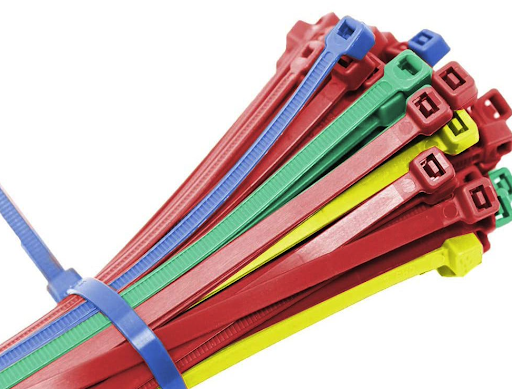
Standard nylon cable ties are well-suited for interior applications where temperature, moisture, and sunlight exposure are limited. They are commonly used to organize wiring, bundle cables, and secure lightweight components in shops, cabinets, and buildings.
Once a cable tie is exposed to sunlight, weather, or temperature swings, material choice becomes more critical. A tie that performs well indoors may not last long in harsher conditions.
Why UV Protection Matters Outdoors
UV‑black nylon cable ties are designed to handle sun exposure. The black color is not just aesthetic. It indicates the presence of UV‑stabilizing additives that slow material degradation from prolonged exposure to sunlight.
Standard nylon can become brittle, crack, or lose strength over time when exposed to UV light. UV‑black cable ties retain flexibility and durability longer, making them a better choice for exterior conduit, fencing, agricultural equipment, construction sites, and other outdoor installations.
If a cable tie will see regular daylight, even indirectly, UV protection is one of the most important considerations for long‑term performance.
Matching Strength and Size to the Application
Cable ties are available in a wide range of lengths and tensile strengths, from light‑duty options to heavy‑duty and extra‑heavy‑duty designs.
Choosing the correct size helps prevent over‑tightening and material stress. Shorter ties work well in tight spaces and for smaller bundles, while longer ties accommodate larger diameters and heavier loads.
Tensile strength ratings indicate how much weight a looped tie can hold under ideal conditions. While this rating is important, it works best when paired with the appropriate material for the environment where the tie will be used.
When Specialty Cable Ties Make Sense
In addition to standard cable ties, specialty options can make installations easier and more reliable.
Screw‑mount and push‑mount cable ties allow bundles to be secured directly to panels, walls, or equipment frames.
Releasable cable ties are useful in applications where adjustments or future maintenance are expected, allowing ties to be opened and reused instead of being cut and replaced.
Choosing the right style improves installation efficiency and helps maintain a cleaner, more organized setup over time.
Where Stainless Steel Cable Ties Fit In
Some environments exceed the limits of nylon cable ties. High heat, chemical exposure, corrosion, and constant vibration all increase the risk of failure.
Stainless steel cable ties are designed for these conditions. They offer exceptional resistance to temperature extremes, harsh chemicals, and mechanical stress, making them well-suited for industrial facilities, manufacturing environments, and applications where failure could create safety concerns or equipment damage.
While they are not necessary for every job, stainless steel ties are the right choice when durability is critical.
Long‑Term Reliability Comes From the Right Match
Cable ties are often installed and left in place, making it especially important to choose the right material from the start. Over time, signs such as discoloration, stiffness, cracking, or damaged locking heads can indicate material breakdown.
Matching the cable tie to the environment, load, and installation method helps prevent unexpected failures and reduces maintenance issues.
Even small decisions, such as choosing UV‑black nylon instead of standard nylon, can significantly improve longevity.
Choosing the Right Cable Tie
Choosing the right cable tie starts with understanding the environment, the load, and the expected lifespan. By focusing on these basics first, most applications can be matched to a dependable option without overthinking the decision.
The categories below offer a straightforward way to select a cable tie that performs reliably in real‑world conditions.
In most applications, cable tie selection can be simplified
- Standard nylon cable ties work best indoors and in controlled environments
- UV‑black nylon cable ties are ideal for outdoor or sun‑exposed applications
- Heavy‑duty and extra‑heavy‑duty ties support larger bundles and higher loads
- Stainless steel cable ties handle extreme conditions where reliability is essential
Cable ties may be simple products, but choosing the right one supports safer, cleaner, and more reliable operations, no matter the industry or application.
Connect with KDAR Company
Cable ties perform best when they are matched correctly to the job. Choosing the right material, strength, and style helps prevent premature failure, reduces rework, and supports safer, more organized work environments.
Focusing on proven selection principles rather than assumptions yields better long‑term results across a wide range of applications.
For retailers, providing clear guidance on cable tie materials and use cases builds customer trust and reinforces your role as a knowledgeable, reliable partner.
For professionals, understanding how different cable ties perform in real‑world conditions helps protect equipment, minimize downtime, and keep projects running smoothly.
At KDAR Company, our priority is to provide high‑quality cable ties and supporting products that help customers work more efficiently, safely, and confidently, while supporting retailers with dependable inventory and expert support.
Explore our
cable tie offerings, and
contact our
team to find the right solutions for your needs today.